Provenance
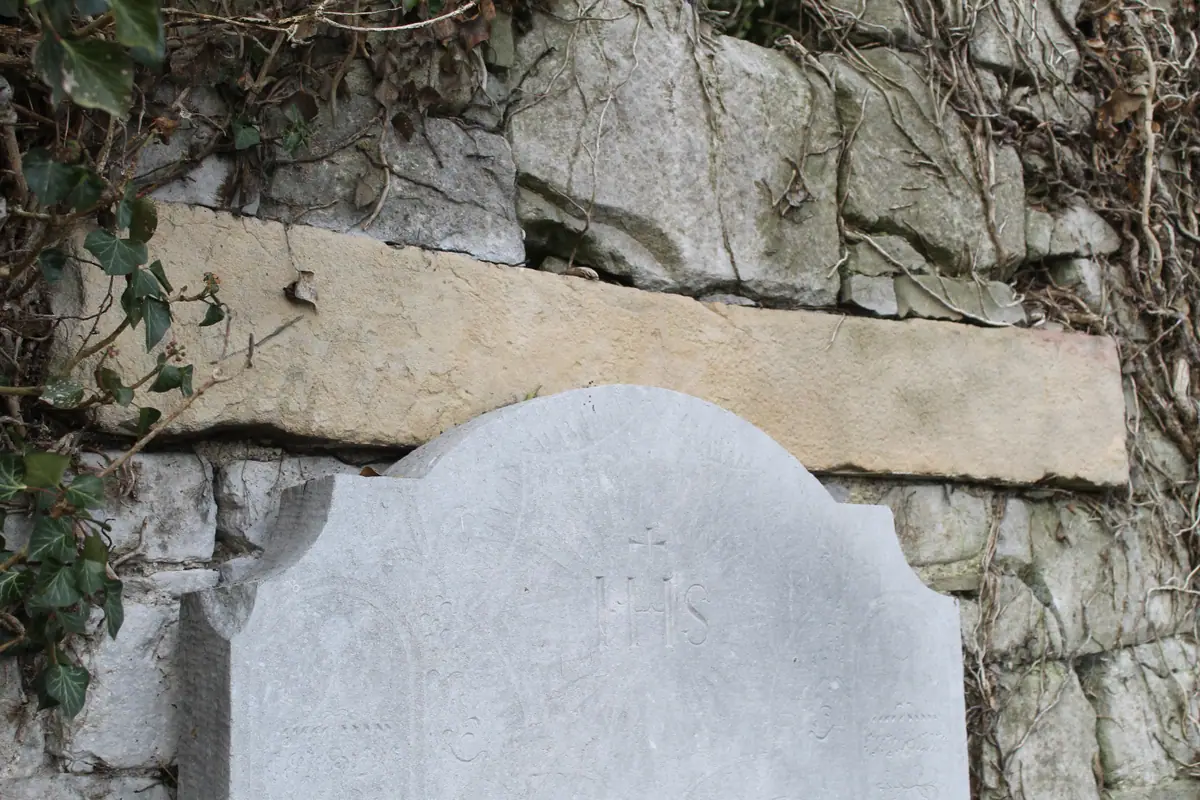
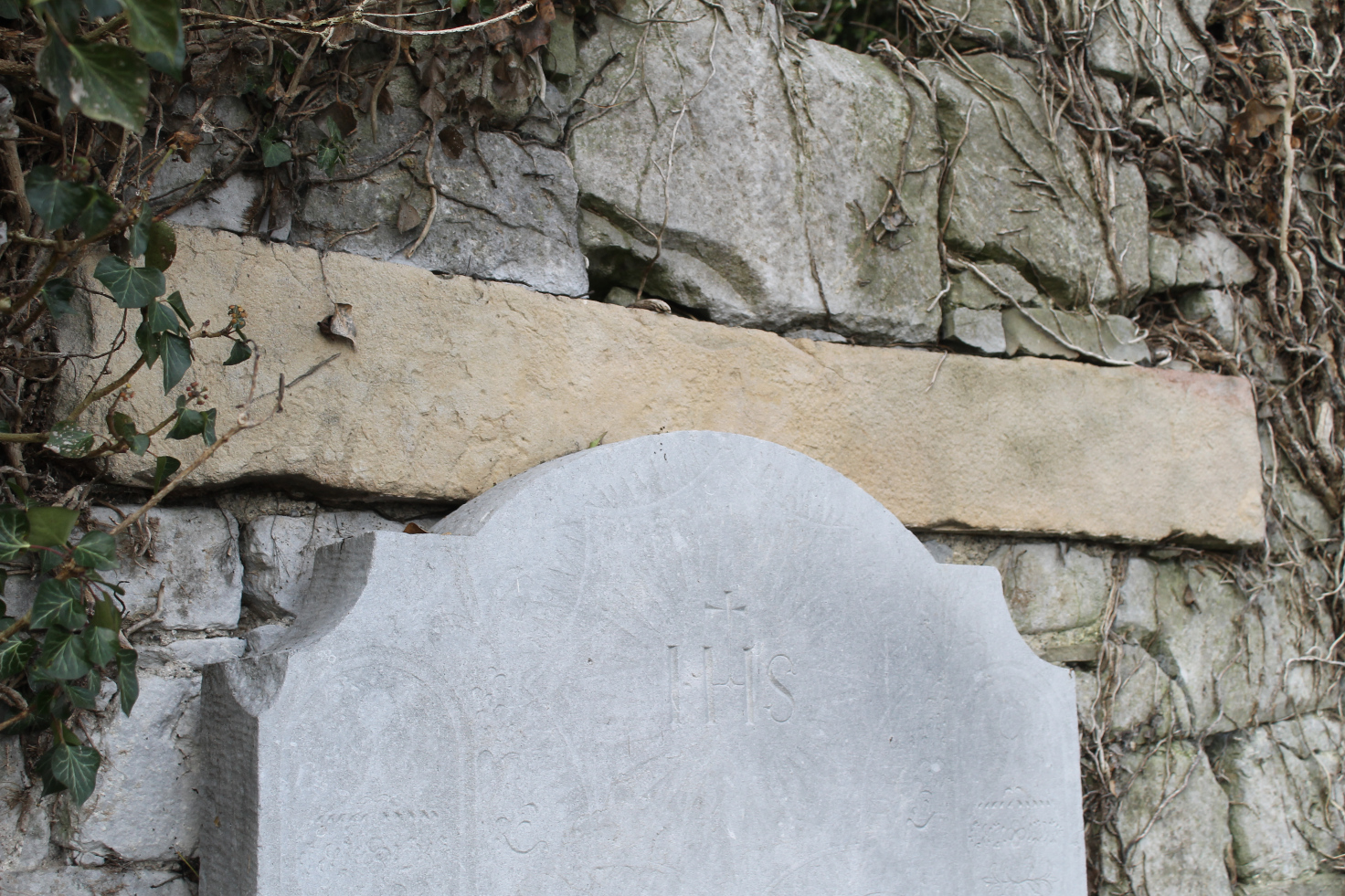
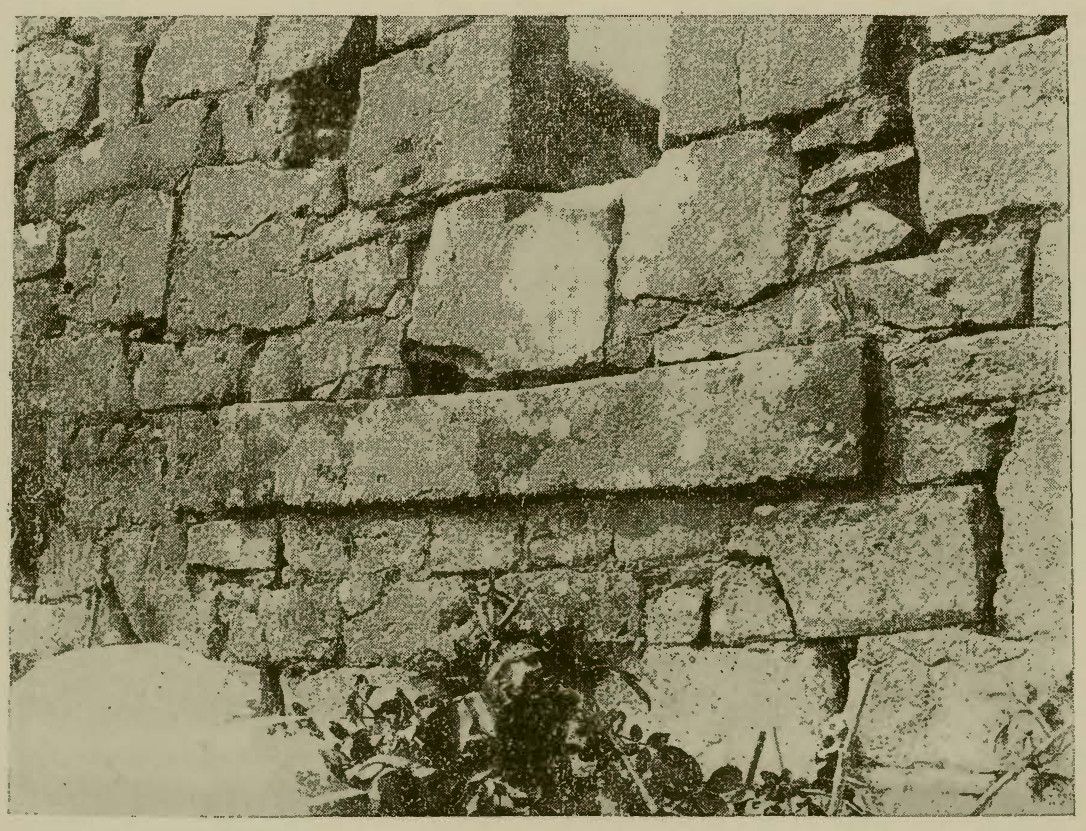
Discovery: This ogham stone, first noted in 1869 (Prim 1868-9, 281-2; Macalister 1945, 33-4), was reused as a sill for a round-headed window in the church, which ‘is clearly a pre-Norman foundation as indicated by the antae (projecting side walls) on the chancel. There is a holy well nearby and two bullaun stones are associated with the site. According to Carrigan the church was dedicated to a St Colmán whose feast day was 16 October. The Martyrology of Oengus (written around AD 800) records a St Colmán of Cell Ruaid (Kilroot, Co Antrim) on that date. A list of homonymous saints in the Book of Leinster and other manuscripts has reference to a Colmán Cláraig, but has no other information about him. This is most likely to be the Clara in question, the only place of the name with a definite pre-Norman chirch and the only civil parish of the name in the country. In addition its former importance is indicated by the fact that it gave its name to one of the deaneries of the medieval diocese. The Ségéne of Clárach, whose death is recorded in 749 is likely to have been connected with this church’ (Manning and Moore 1997, 370-371). A second ogham stone (I-KIK-003) was discovered at the site by Con Manning in the late 1970s (Manning and Moore 1997, 371).
Findspot: Churchclara (Clárach an Teampaill), Co. Kilkenny, Ireland (ITM Coordinates: 657786, 656371)
Last recorded location(s): In situ in the East gable of the church, now partly concealed by a modern tombstone erected against the wall. In 2017 both ogham stones were recorded in 3d using photogrammetry and in June 2020 digitised here as an action of the County Kilkenny Heritage Plan Programme, funded by the Heritage Office of Kilkenny County Council and the Heritage Council.
Support
National Monuments Service SMR ID: KK020-017003-
Object type: Pillar
Material: Sandstone
Dimensions:
Condition: This red sandstone pillar is reused as a window sill in the church. It was inserted in the E gable in the late 12th/early 13th century, replacing the original window (Ó Carragáin 2010, 158, fig. 166). Macalister (1945, 33-4) noted that ‘the top of the stone is broken off, and the first angle is spalled’.
Inscription
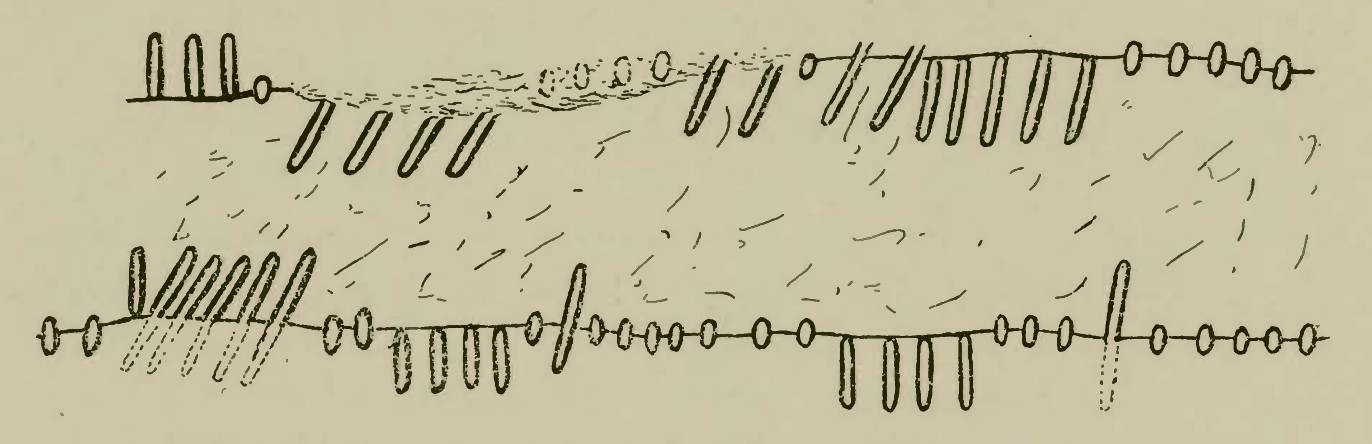
Text field: The inscription runs up one angle and down the other.
Letters: Macalister (1945, 34) describes the inscription as ‘chisel cut’ but it appears to be pocked.
Edition
Transcription: TAṢ[EGA]GN[I MAQ(?)]Ị MUC[O]Ị MAC̣[O]Ṛ[BO]
References
- Macalister 1945, 33-34