Provenance
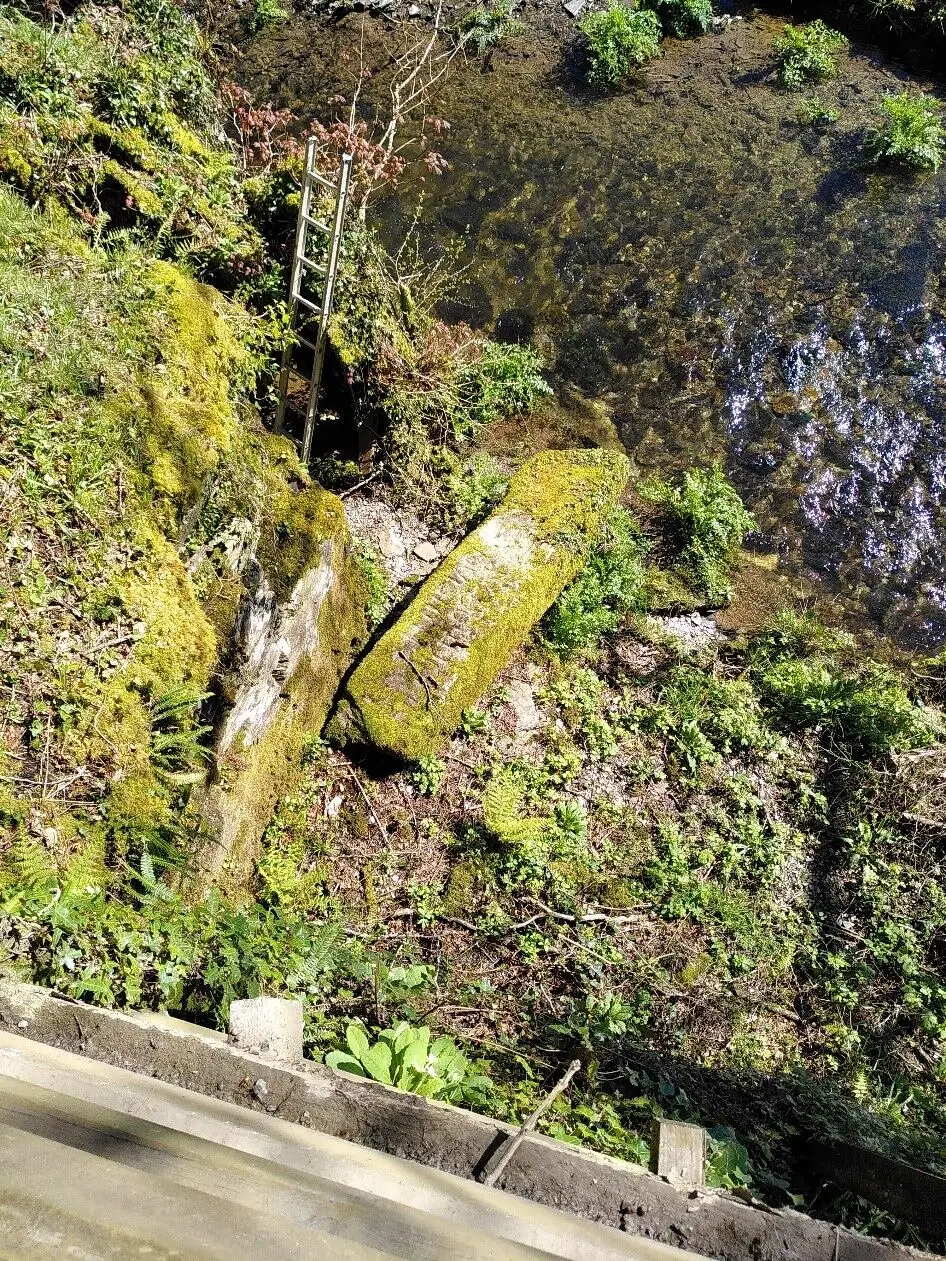
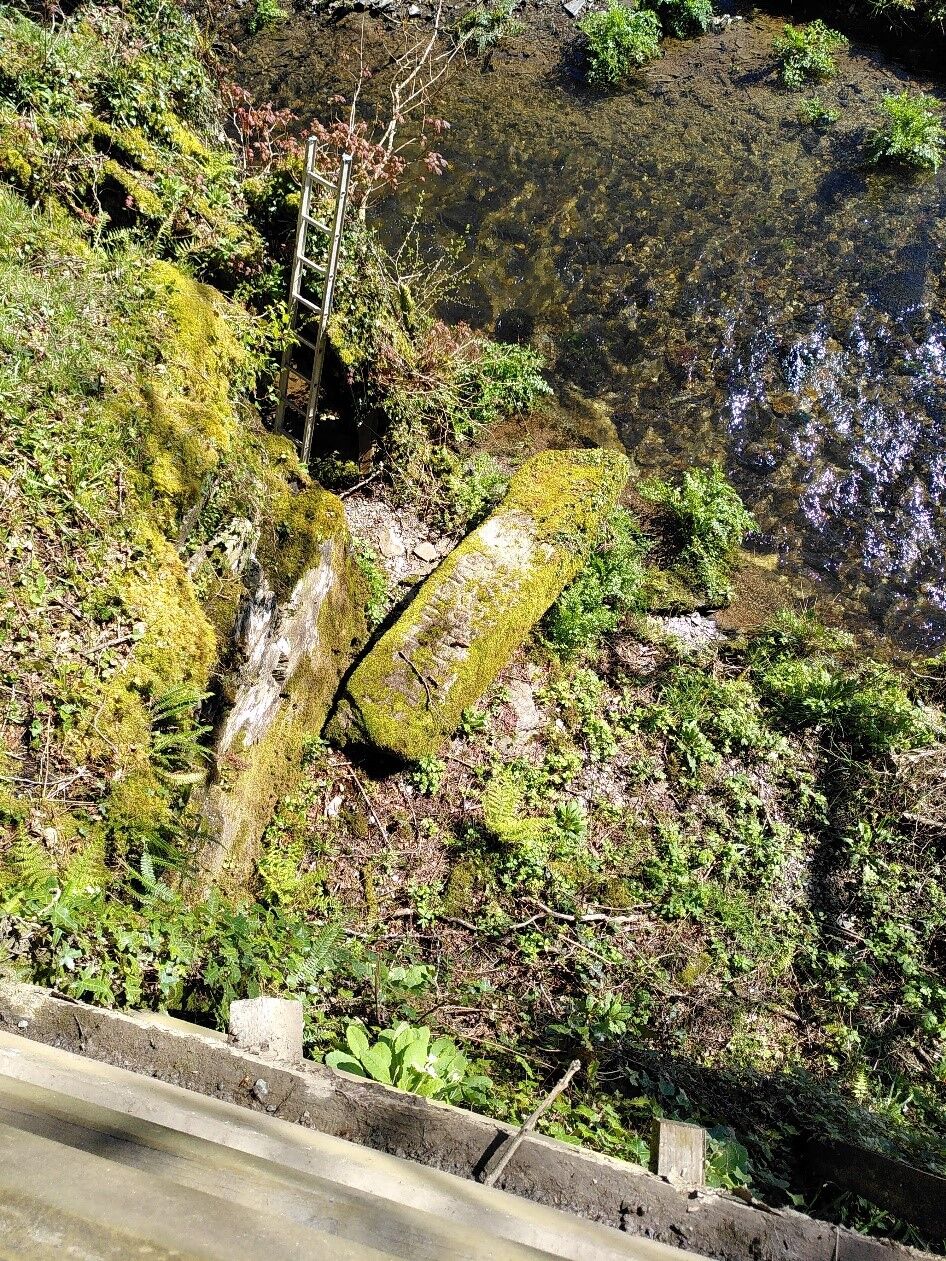
Discovery: The stone was first recorded by Richard Carew (1602). Rhys (1875, 363) was the first to record the ogham inscription (1) . The stone served as a footbridge, known as Slaughter Bridge, over the river Camel until 1754 when Lady Dowager Falmouth erected the stone in a natural grotto on the river’s western bank. The stone is known locally as ‘King Arthur’s Stone’, an attribution ‘based on a misreading of the final letters of the Latin epitaph as ATRY’ (Macalister 1945, 448). Until recently, the stone was in a precarious position, beneath a cliff and projecting into the river, on the left bank of the river Camel about 100 m upstream from Slaughter Bridge.
Findspot: Forrabury and Minster, Cornwall, England (National Grid Reference: SX 1092 8568)
Last recorded location(s): The stone was removed from the riverside in 2024 and re-erected in a safer place above the river cliff by Cornwall Archaeological Unit and Historic England. Access is via The Arthurian Centre (entrance fees apply). Visited and recorded by the OG(H)AM project in April 2024. The stone was also re-recorded in 3D by Tom Goskar.
Support
Historic Environment Record ID: HER Number: 2240
Object type: Pillar
Material: Grit
Dimensions: H 2.9 × W 0.68 × D 0.55 m
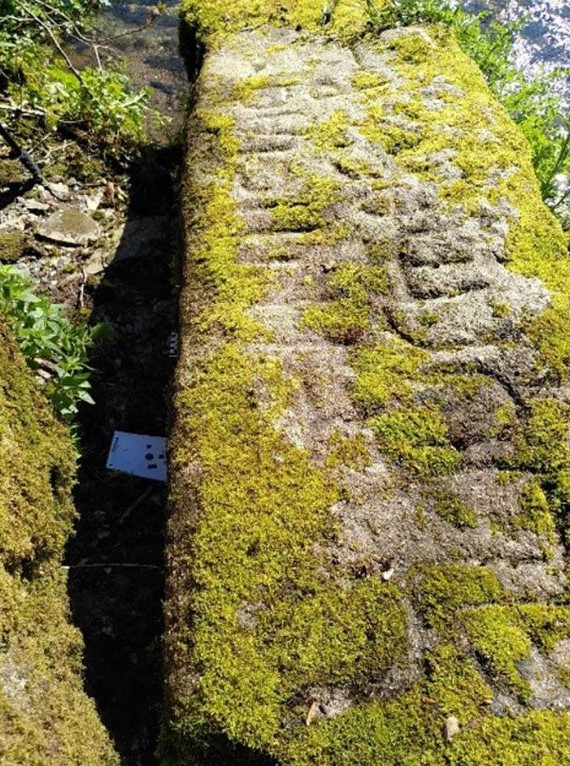
Condition: A large menhir bearing bilingual inscriptions and almost completely covered by lichen and moss. The Latin inscription is clear except for part of the final name but the ogham inscription is badly worn with almost the entire surface removed except for the final few letters.
Inscription
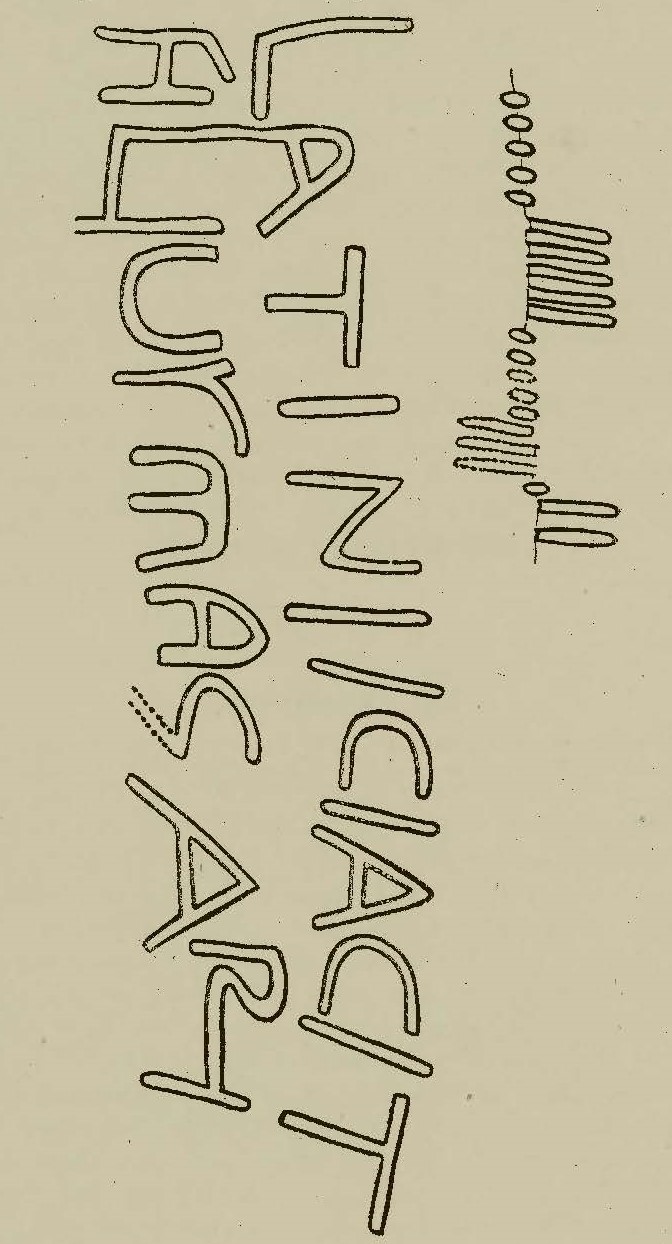
Text field: The ogham inscription (1) is found on the right edge near the top end of the front right-hand face of the stone and reads upwards. The roman/Latin inscription (2) occupies the same face and reads downwards.
Letters: Only the last three characters of a very worn ogham inscription (1) remain. These appear to have been pocked and are quite evenly spaced. The Roman inscription (2) was ‘cut and rubbed’ (Macalister 1945, 448). The form of the -s is half-uncial rather than capital. FI, LI and RI are all ligatured.
Edition
Transcription: [---]GNI
Critical apparatus:
- Macalister (1945, 449) read: Ogham: LA[TI]NI; Roman: LATINI IC IACIT FILIUS MAGARI 2. Charles Thomas (1994, 263) preferred ‘of Macarus’ to Macalister’s (1945, 149) ‘Magarus’ in the roman-letter, Latin inscription (2). Unfortunately, the surface in this area has gone, so it is not possible to confirm which reading is preferrable.
Translation
Roman: here lies Latinus, son of Magarus/Macarus
Commentary
On recording the stone in 3d for the OG(H)AM project it was discovered that the surviving letters are apparently: –GNI, evidently the common suffix -AGNI (OIr. -án), with individualising or diminutive function.
Interesting features in the roman inscription (2) include the ungrammatical filius rather than filii, and the form of the -s is half-uncial rather than capital.
References
- Macalister 1945, 447-449, no. 470
- Okasha 1993, 333-337, no. 78
- Rhys 1875, 362-363
- Thomas 1994, 263