Provenance
Discovery: Discovered by Macalister (1919,401) and first published by him in 1919. The townland name in Irish is Achadh Liag, meaning ‘field of the pillar-stone’.
Findspot: Aghaleague (Achadh Liag), Co. Mayo, Ireland (ITM Coordinates: 513189, 835110)
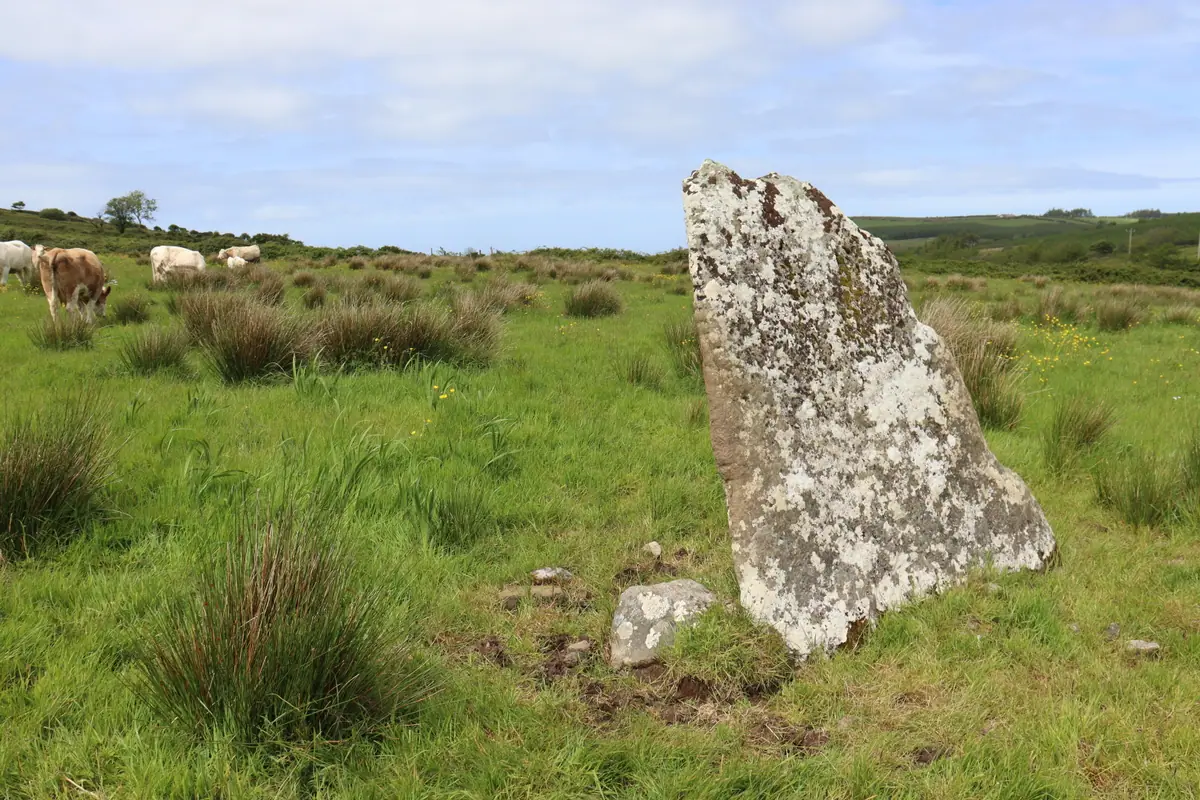
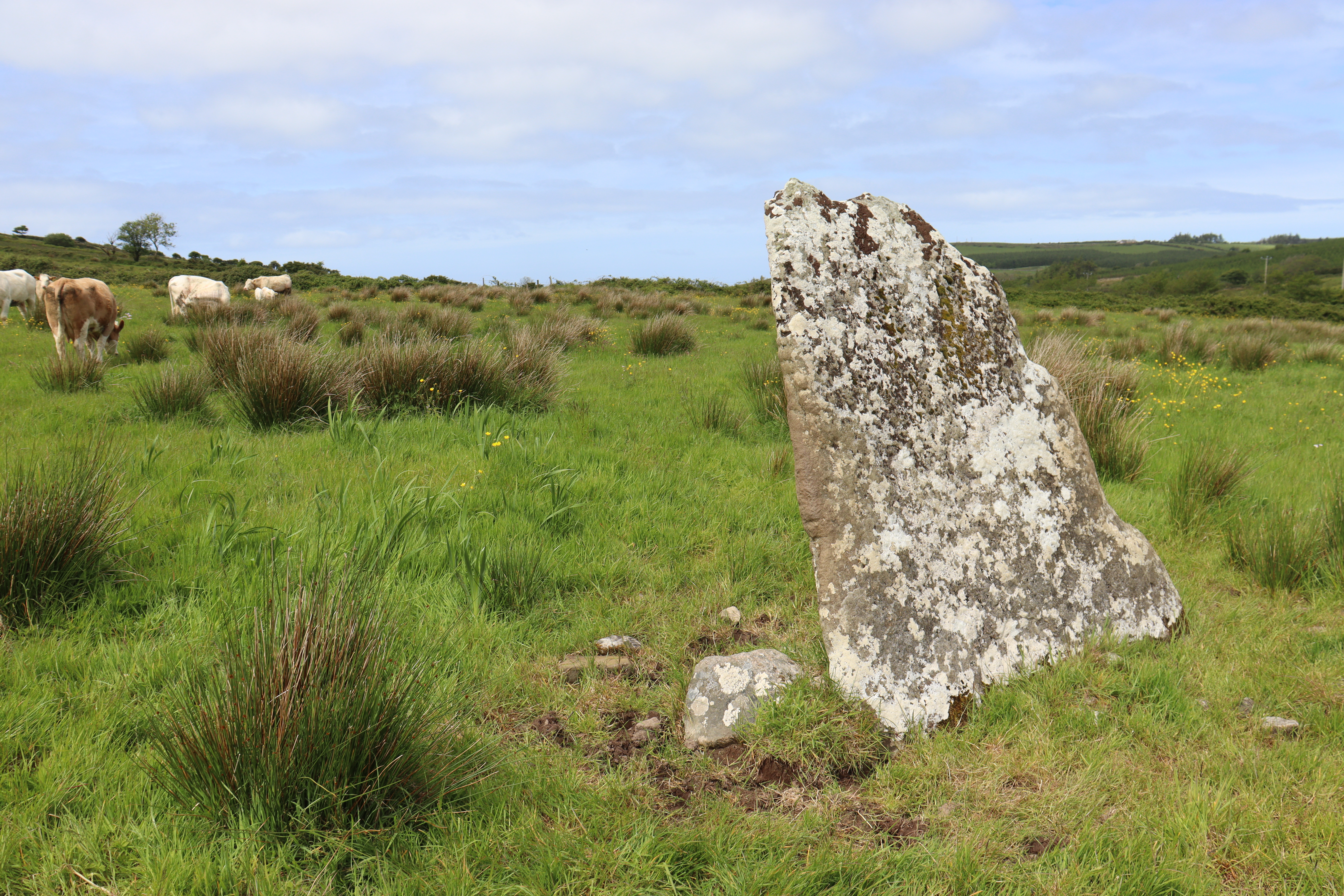
Last recorded location(s): In situ in pasture, in damp, flat, low-lying ground on the west side of a stream valley. The north-flowing stream is located 40m to the east of the stone between the road and the stone (Archaeological Survey of Ireland, Field Report 2017). Visited and 3D recorded as part of the Mayo Ogham project 2022, funded by The Heritage Council and Mayo County Council.
Support
National Monuments Service Record Number: MA014-101----
Object type: Slab
Material: Sandstone
Dimensions: H 1.90 × W 2.20 × D 0.15 m
Condition: ‘The stone leans markedly to the north-west: the current height of the stone (i.e. vertical drop from top to the ground surface) is 1.9m, however, if the stone were fully vertical, its height would be c. 2.3m’ (Archaeological Survey of Ireland, Field Report 2017). The stone is weathered and largely lichen-covered. The middle section of the south-west face presents a smooth, almost polished surface, probably the result of farm stock using this side of the stone as a scratching post; part of the inscription may have been obliterated here.
Inscription
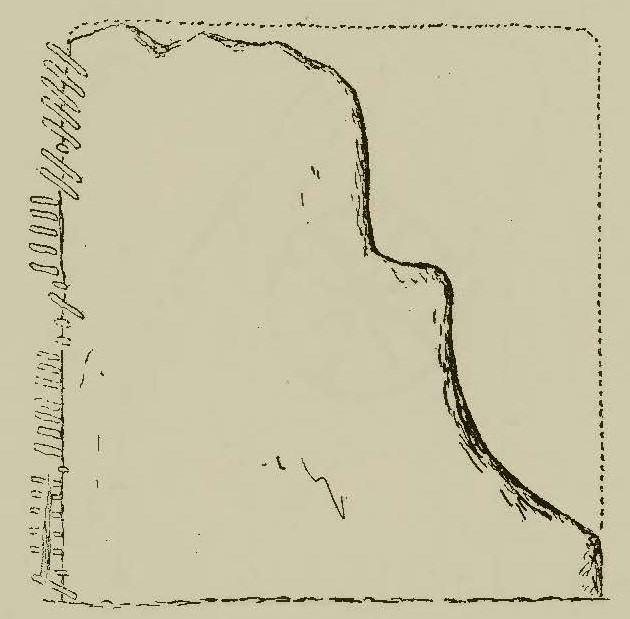
Text field: The ogham inscription reads up on one angle of the narrow south-west face of the stone.
Letters: The ogham inscription is pocked and rubbed in broad, shallow grooves, as noted by Macalister (1945, 12).
Edition
Ogham text: ᚋᚐ
Transcription: MAQ̣AC̣TO MAQ GAṚ[---]
Critical apparatus:
- Macalister (1919, 401) read: OTTACI MAQ GARA[---]
Commentary
Macalister’s ACTO, if correct (note earlier reading: OTTACI), may be related to the Old Irish verb aigid ‘to lead, drive’ and the later attested name Achtán. The name ACTO also occurs in inscription I-COR-041 (Ballyknock, Co. Cork). The remaining start of the father’s name may contain the adjective gar ‘short’ or garb ‘rough’ but it is impossible to be sure with so little surviving. Names such as Garbán and Garbith appear in later manuscript sources.
References
- Macalister 1919, 401
- Macalister 1945, 12-13