Provenance
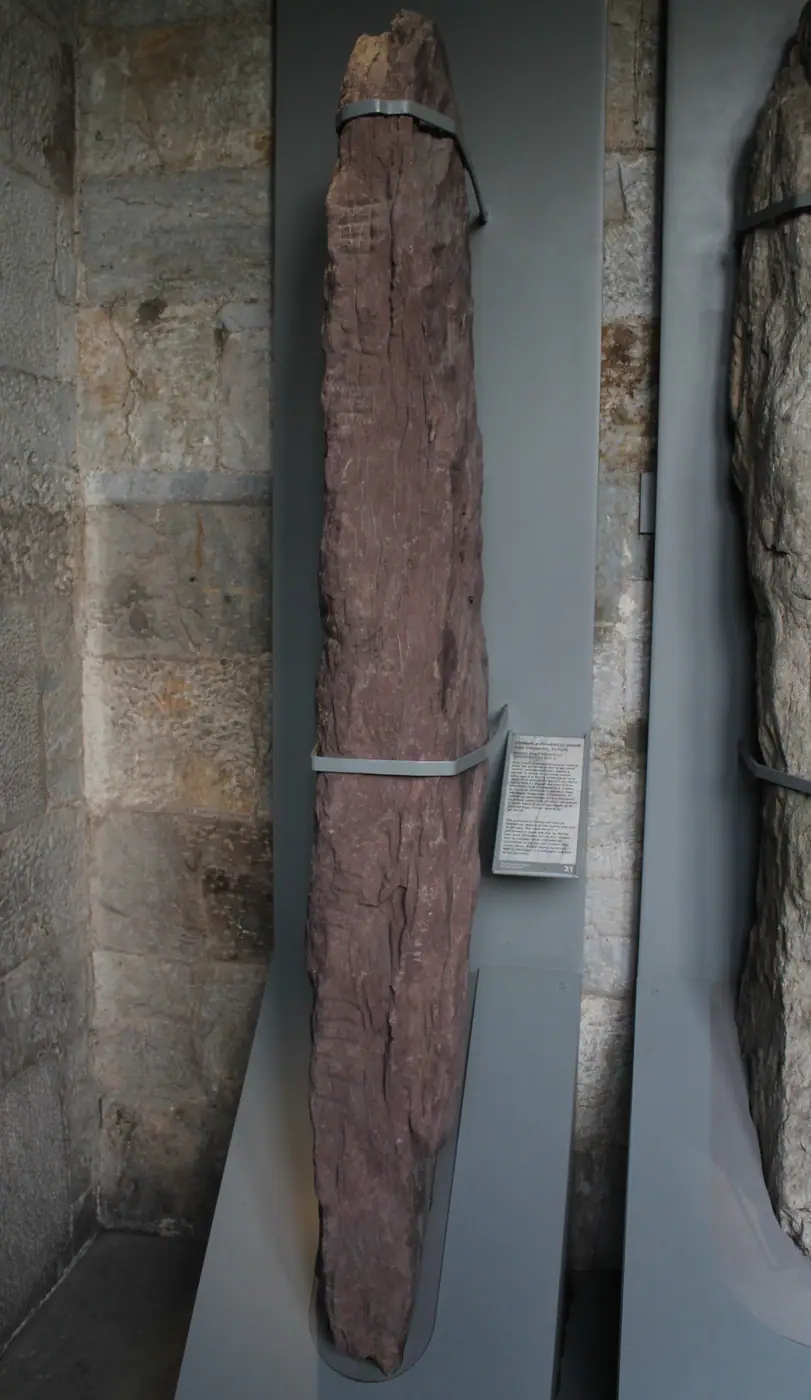
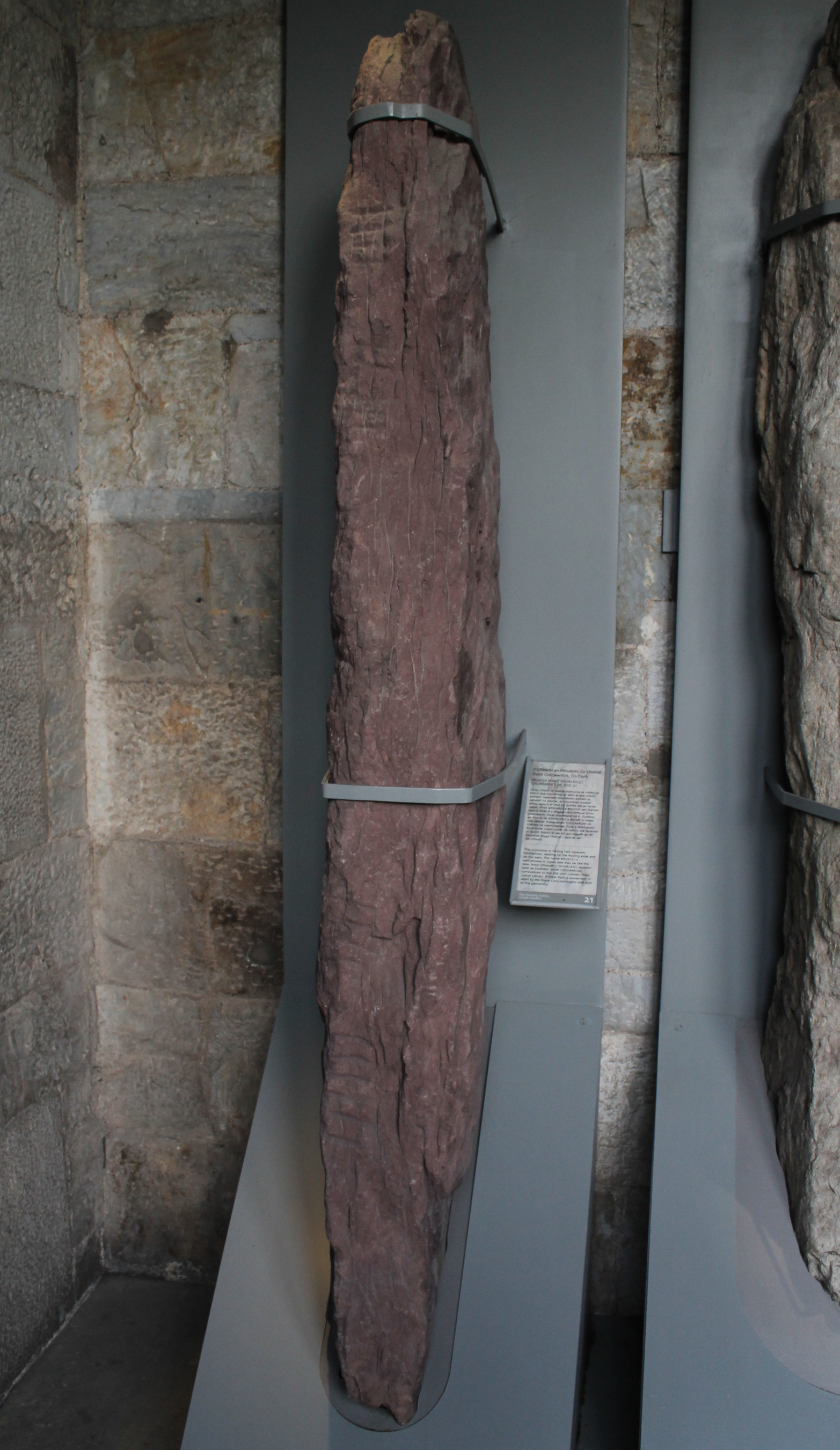
Discovery: Discovered by Rev. J Cotter and W. Hackett of Midleton in 1844 after opening a souterrain (SMR no. CO065-03202-) inside a ringfort, partially under present site of Ballynatrasna House (Power 1994, 63, no. 4237). This was one of six ogham stones collected in the early 19th century by the South Munster School of Antiquaries, in particular John Windele and Richard Brash, and were originally housed in the Royal Cork Institution before being moved to the newly established (1845) Queen’s College Cork, as the university was formerly known, in 1861 (McManus 2004, 10). A second ogham stone (I-COR-012) found in the same souterrain has been re-erected within the townland on the site of another erased rath.
Findspot: Glenawillin (Gleann an Mhuilinn), Co. Cork, Ireland (ITM Coordinates: 587641, 579717)
Current repository: Ireland University College Cork (inv. no. 21)
Last recorded location(s): Now on permanent display in the Stone Corridor (‘Rúin na gCloch / Stories in Stone’ exhibition), University College Cork, where it was examined and photographed for the OG(H)AM project in May 2024.
Support
National Monuments Service SMR ID: CO065-098----
Object type: Pillar
Material: Sandstone
Dimensions: H 2.20 × W 0.56 × D 0.20 m
Condition: One of two ogham stones reused in a souterrain. According to Macalister (1945, 67), the height of the stone was 2.20m (7ft. 2in.) but only 2.09m (6ft. 10in.) are currently accessible. Macalister (1945, 67) also noted that the inscription on the dexter side (against the wall in its current position) is ‘much flaked’ and the ‘concluding letters are almost evanescent’. All of the ogham stones in the UCC collection underwent conservation in 2006. The stones are currently in display cases and held in position by brackets.
Inscription
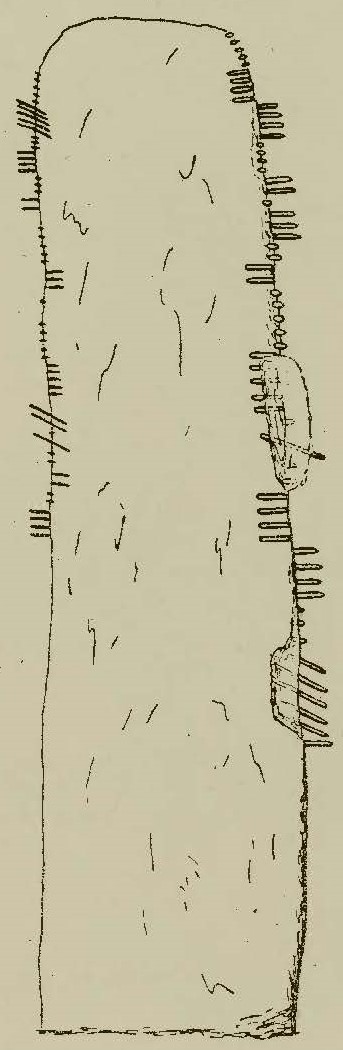
Text field: There are two independent inscriptions on opposite sides of the ogham stone. Both inscriptions read upwards (Macalister 1945, 66).
Letters: The two ogham inscriptions are chiselled and pocked. As noted by Macalister (1945, 67), the first/dexter inscription (on edge against the wall) is cut in fine lines and the second/sinister inscription (on outward facing edge) is pocked in bold scores.
Edition
Ogham text: ᚉᚑᚂᚑᚋᚐᚌ̣ᚅ[ᚔ ᚐ]ᚃᚔ̣ ᚇᚒᚉ[ᚒᚏᚔ] ᚁᚏ̣[ᚒ]ᚄᚉ[ᚑ ᚋᚐᚊᚔ] ᚇᚑᚃᚐ̣ᚂᚓ̣ᚄᚉ[ᚔ]
Transcription: COLOMAG̣N[I A]VỊ DUC[URI] BṚ[U]SC[O MAQI] DOVẠLẸSC[I]
Critical apparatus:
- In the second inscription, the R of Macalister’s BRUSCO is uncertain. As he notes, the H-side is spalled away but the B-side strokes are not as slanted as in his drawing. The S strokes, however, are a little slanted.
Translation
1: of Colmán descendant of D?
2: of Brosc son of Duiblesc
Commentary
In the first inscription, the name COLOMAGNAS is quite common, especially later in the form Colmán.
In the second inscription, the name BRUSCUS (OIr. brosc ‘thunder’) also occurs on I-KER-048 Emlagh East, Co. Kerry but in an earlier genitive form with the final consonant intact (BRUSCCOS). The father’s name (DOVALESCI), appears to comprise of the adjectives dub ‘black’ and, possibly, lesc ‘lazy, sluggish’, or flesc ‘rod’ (McManus 1991, 105, 106; Ziegler 1994, 170). cf. Duib Leisc, Rawl. 155b24 (but Oengus Dublesc (?), 13)
References
- Power 1932, 17
- Macalister 1945, 66-7, no. 63
- Power and et al. 1994, 63, no. 4237
- Ziegler 1994, 143, 170
- McManus 2004, 10, 20-21, no. 21