Provenance
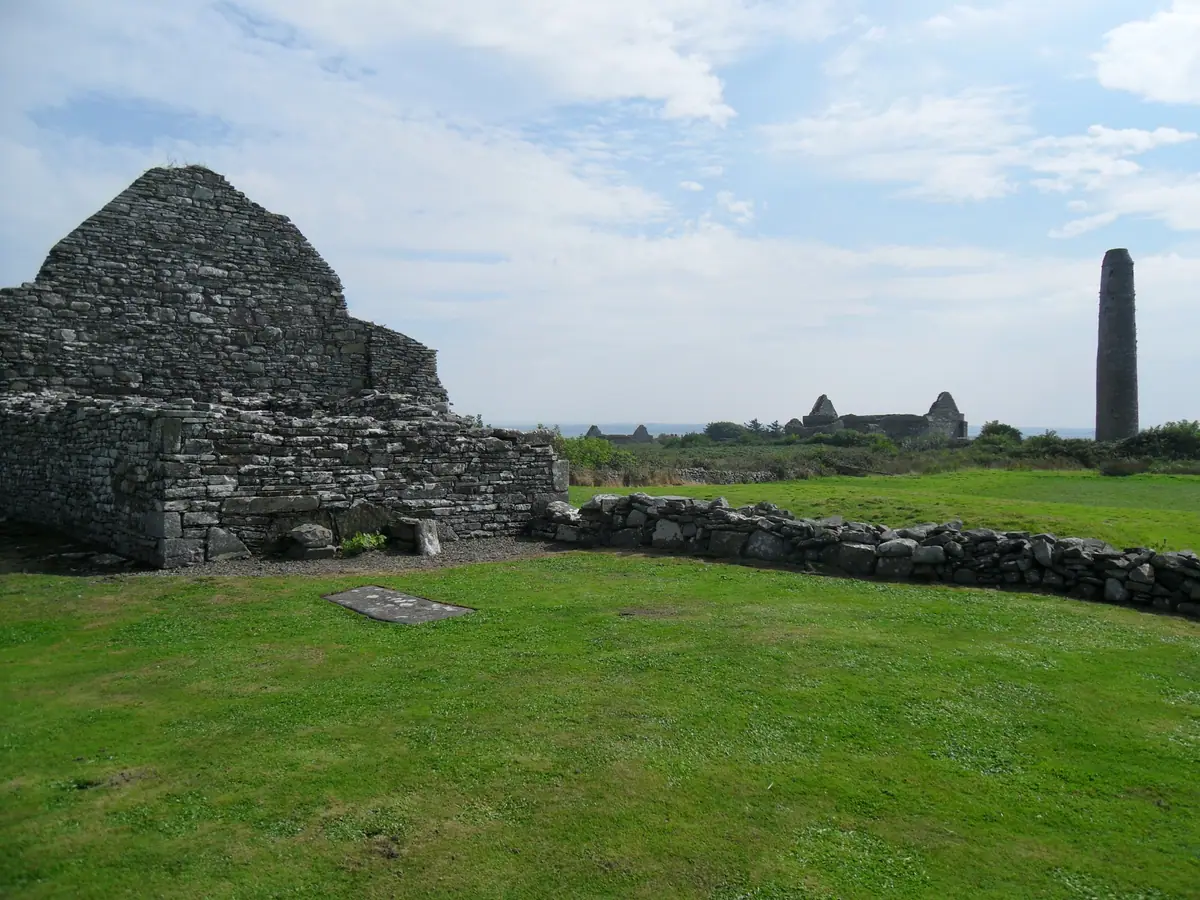
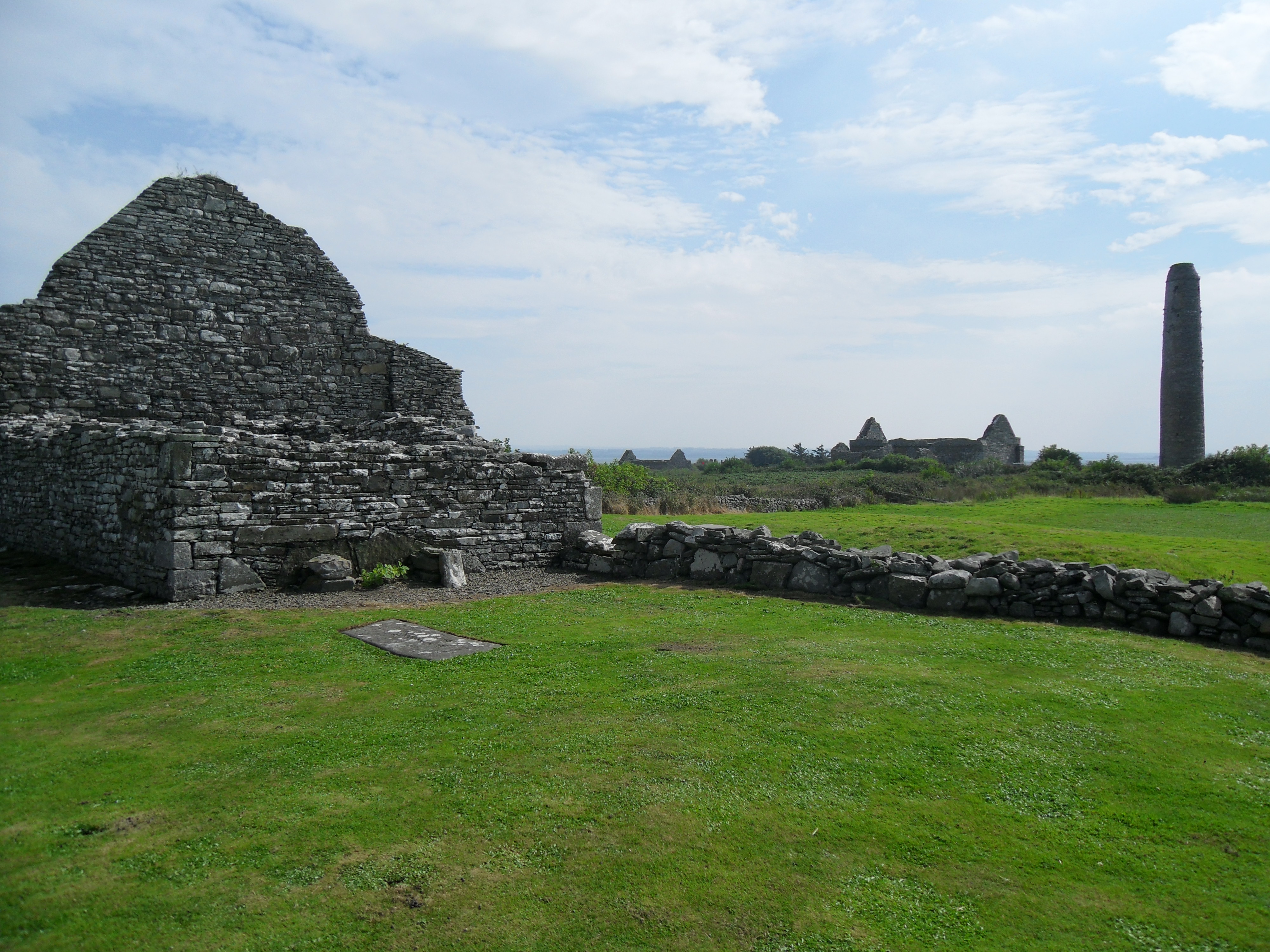
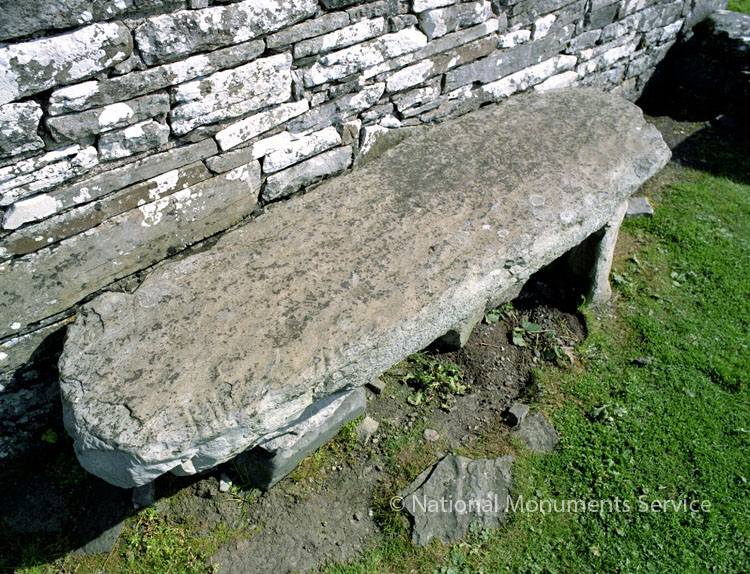
Discovery: Okasha and Forsyth (2001, 112) state that this stone was first noted by Westropp (1897, 285) as having ‘ogham-like’ strokes, but that it was overlooked by Macalister and later scholars. ‘Scattery Island, at the mouth of the Shannon near Kilrush, has been an ecclesiastical centre since early times. A monastery was reputdely founded here by St Senan in the sixth century, but suffered under the Vikings in the ninth and tenth centuries … There are visible today the remains of the monastery, including a round tower, of the cathedral and of three ruined medieval churches. One of these Teampall Seanáin, or St Senan’s church, stands on higher ground to the north of the main group of buildings’ (Okasha and Forsyth 2001, 112). A structure/enclosure known as ‘St Senan’s Bed’ (CL067-024002-), where Senan is reputedly buried, is located beside this church. Also located here is a 9th or 10th-century cross-slab with two inscriptions in half-uncial script reading: OROIT DO MOINACH (‘A prayer for Moínach’) and OROIT DO MOENACH AITE MOGROIN (‘A prayer for Móenach tutor of Mogrón’). The ogham stone was formerly set against the west wall of the enclosure, known as ‘Senan’s Bed’, where it was used as the seat of a bench-like structure but was moved in 2014.
Findspot: Scattery Island (Inis Cathaigh), Co. Clare, Ireland (ITM coordinates: 497218, 652664)
Last recorded location(s): Now on display inside the refurbished exhibition centre on the island. Examined and recorded, in collaboration with the Discovery Programme, for the Ogham in 3D project in 2014.
Support
National Monuments Service SMR ID: CL067-024016-
Object type: Slab
Material: Gritstone
Dimensions: H 2.00 × W 0.60 × D 0.14 m
Condition: The slab is very weathered and worn and only a few ogham strokes are discernible.
Inscription
Text field: Faint traces of strokes near the end (presumably the top) of one angle, commencing approximately 50cm from the end.
Letters: Pocked in neatly parallel strokes of equal length (60 mm long and 20 mm apart.
Edition
Transcription: [---]Ṣ[.. ? ..]ẠS[---]
Critical apparatus:
- Reading upwards with the inscribed angle to the left of the face (the most typical layout for classical inscriptions), the surviving text commences with four strokes. The first two are partially damaged and all are slightly slanted (like M aicme letters), although there is no trace of continuation on the opposite side of the angle, which could be damaged and/or weathered. Following a gap of approximately 160mm, there is a single possible vowel notch (A) followed by four, relatively clear strokes, again on the face side (B aicme) of the angle near the top of the stone (S). The inscription could have continued over the top and down the opposite angle but damage to the stone means we can’t be sure.
References
- Okasha and Forsyth 2001, 156
- Westropp 1897, 276-290