Provenance
Discovery: The ogham-inscribed slab was discovered in 1870 during excavation of the Broch of Burrian. It was in the third and final phase of use of the site, characterised by early Christian activity, that the ogham slab was discovered ‘towards the south side of the broch, where the wall was so low that, though the slab lay not much above the floor of the tower, it was also not far from the surface’ (Traill 1890, 346). As early as 1871 Sir Henry Dryden had solicited Brash’s views on the ogham. This is the first mention of ogham in print and Brash’s is the first illustration (Forsyth 1996, 187).
Findspot: North Ronaldsay, Orkney, Scotland (National Grid Reference: HY 7627 5138)
Current repository: Scotland National Museums of Scotland (inv. no. X.GB 1)
Last recorded location(s): The stone was donated to the National Museum of Scotland (X.GB 1). It was recorded by OG(H)AM team on 30 November 2021.
Support
Trove 3679
Object type: Cross-slab
Material: Clay slate
Dimensions: H 0.75 × W 0.38 × D 0.05 m
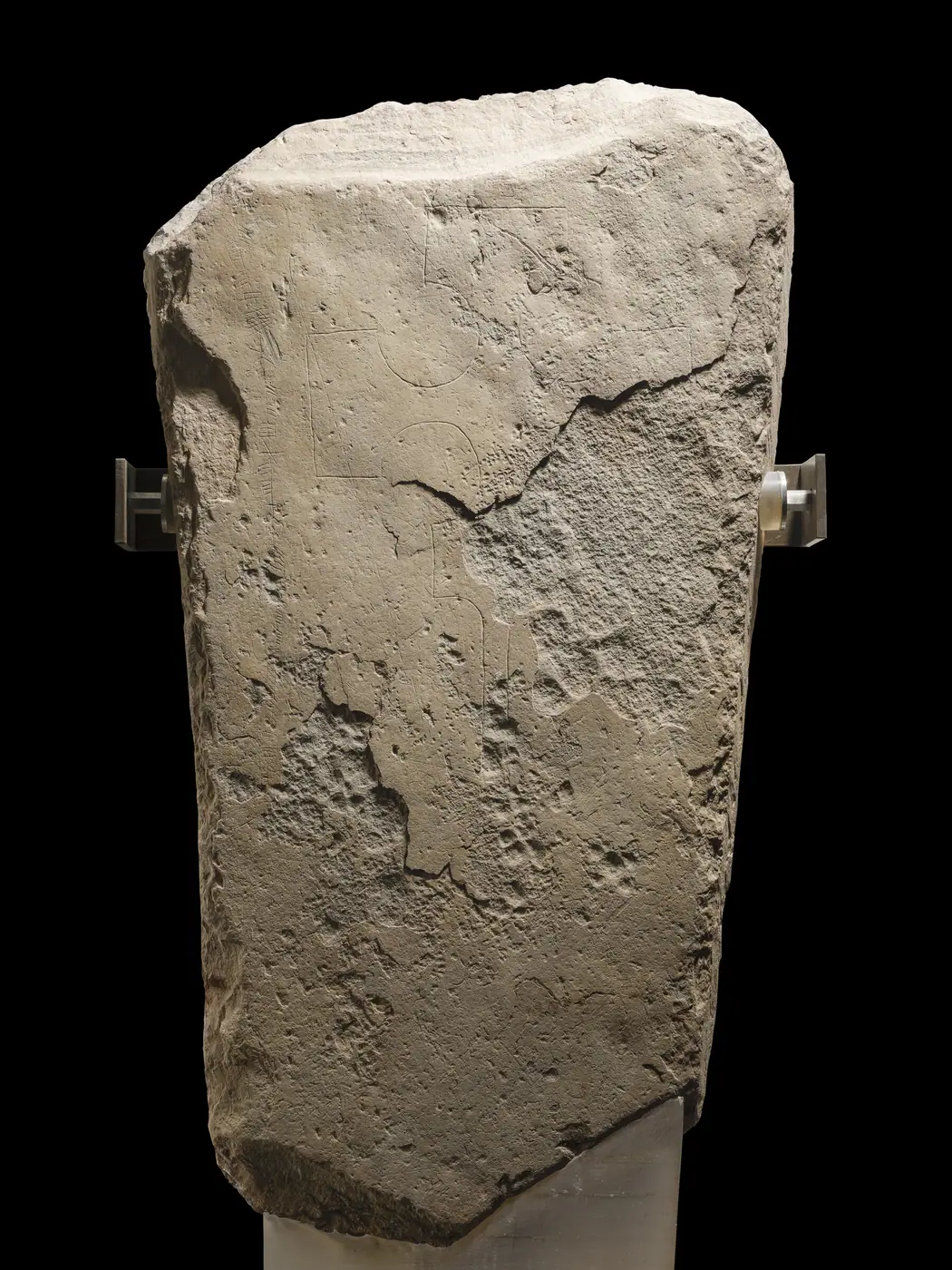
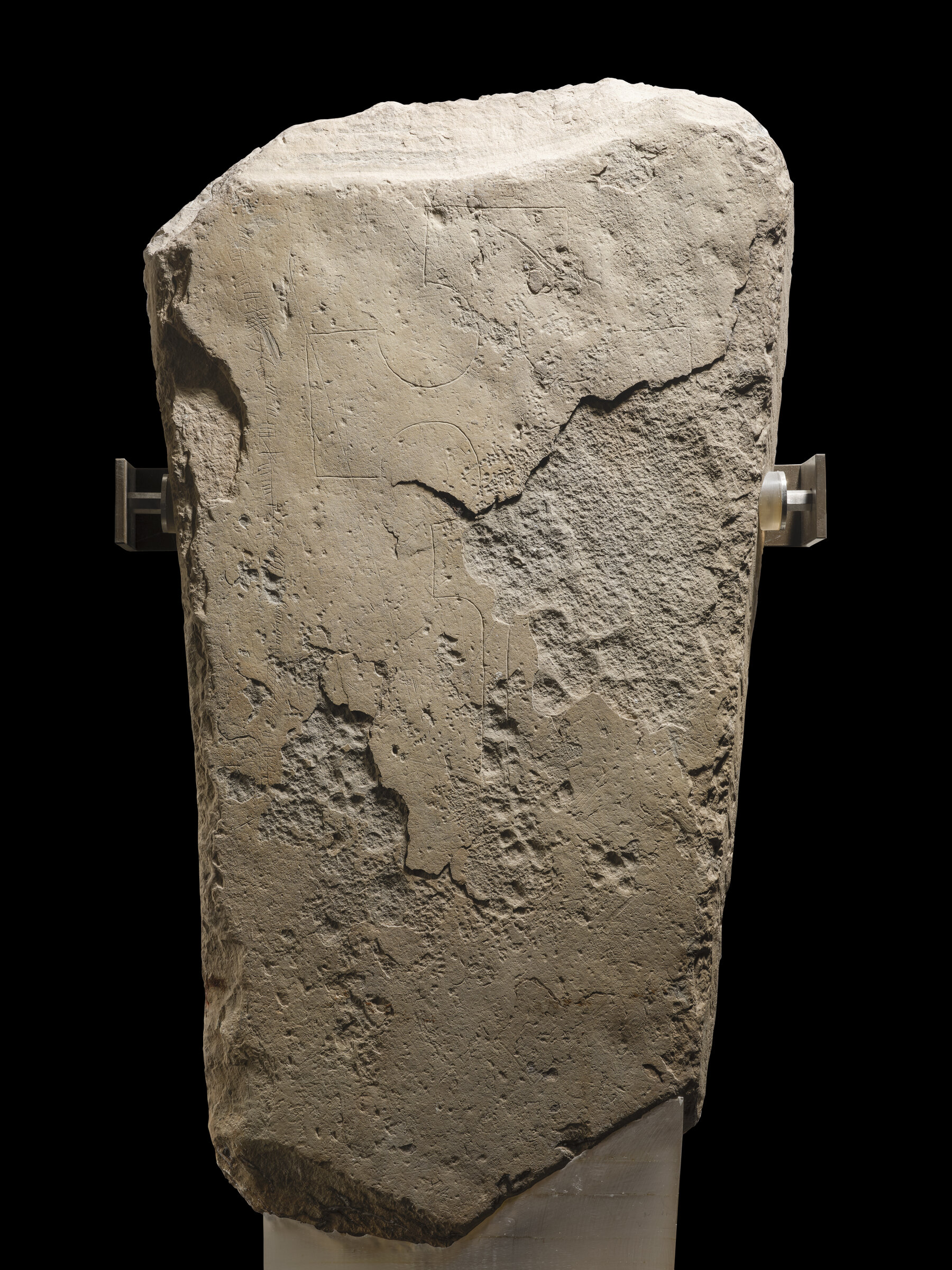
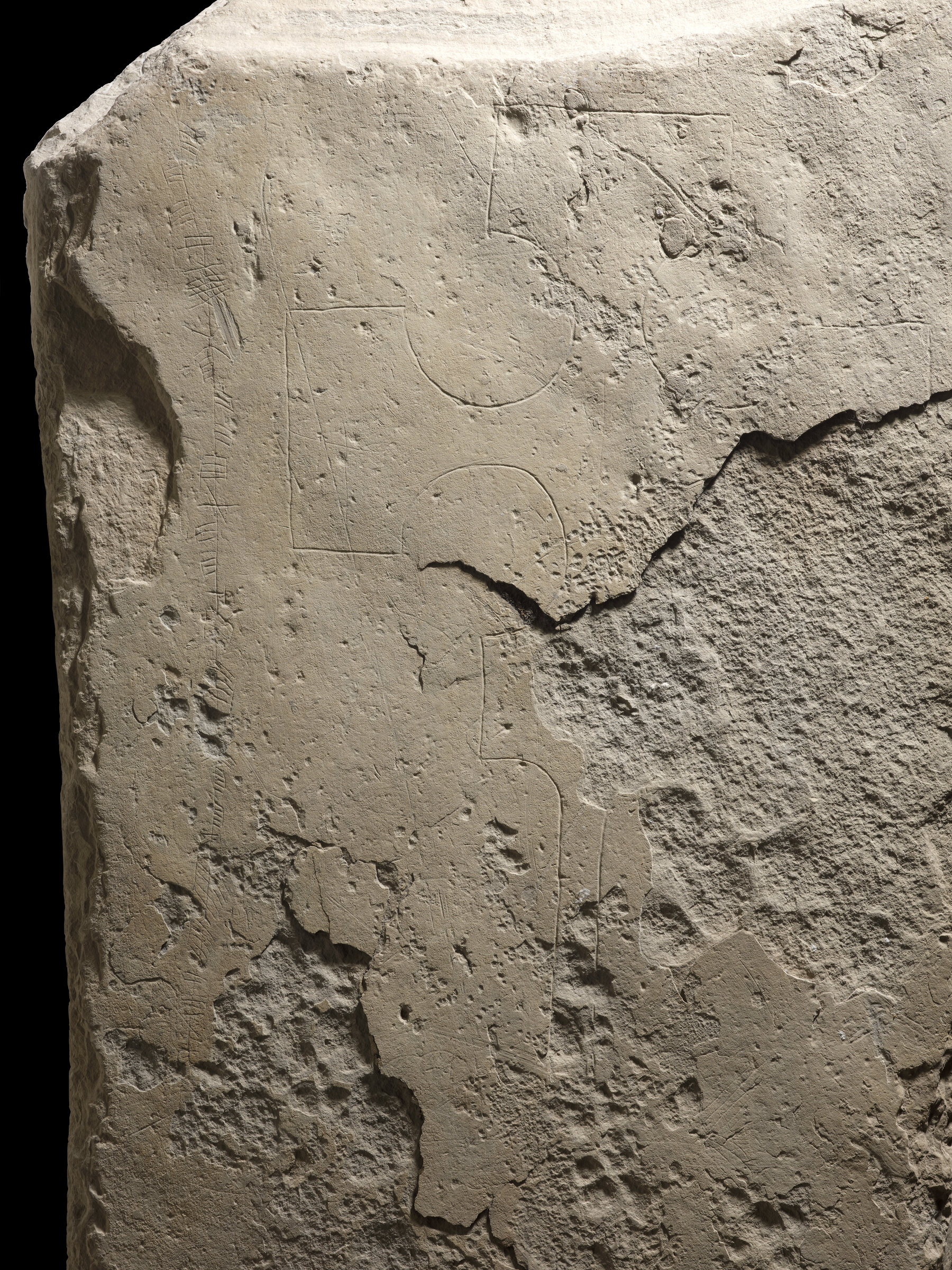
Decoration: The slab has a very lightly incised cross on its broad face. The cross is carved towards the right-hand side of the slab and has an equal-armed head with four expanded rectangular terminals and wide circular armpits.
Condition: The surface of the slab has suffered from flaking, and some of the carving of the cross has been lost as a result. The shaft is weathered and incomplete. The ogham inscription is largely intact and clear (Forsyth 1996, 189). However, Forsyth (1996, 193) notes that surface damage has rendered the beginning of the ogham indistinct. It is possible that there were letters below the visible beginning of the text but no traces remain.
Inscription
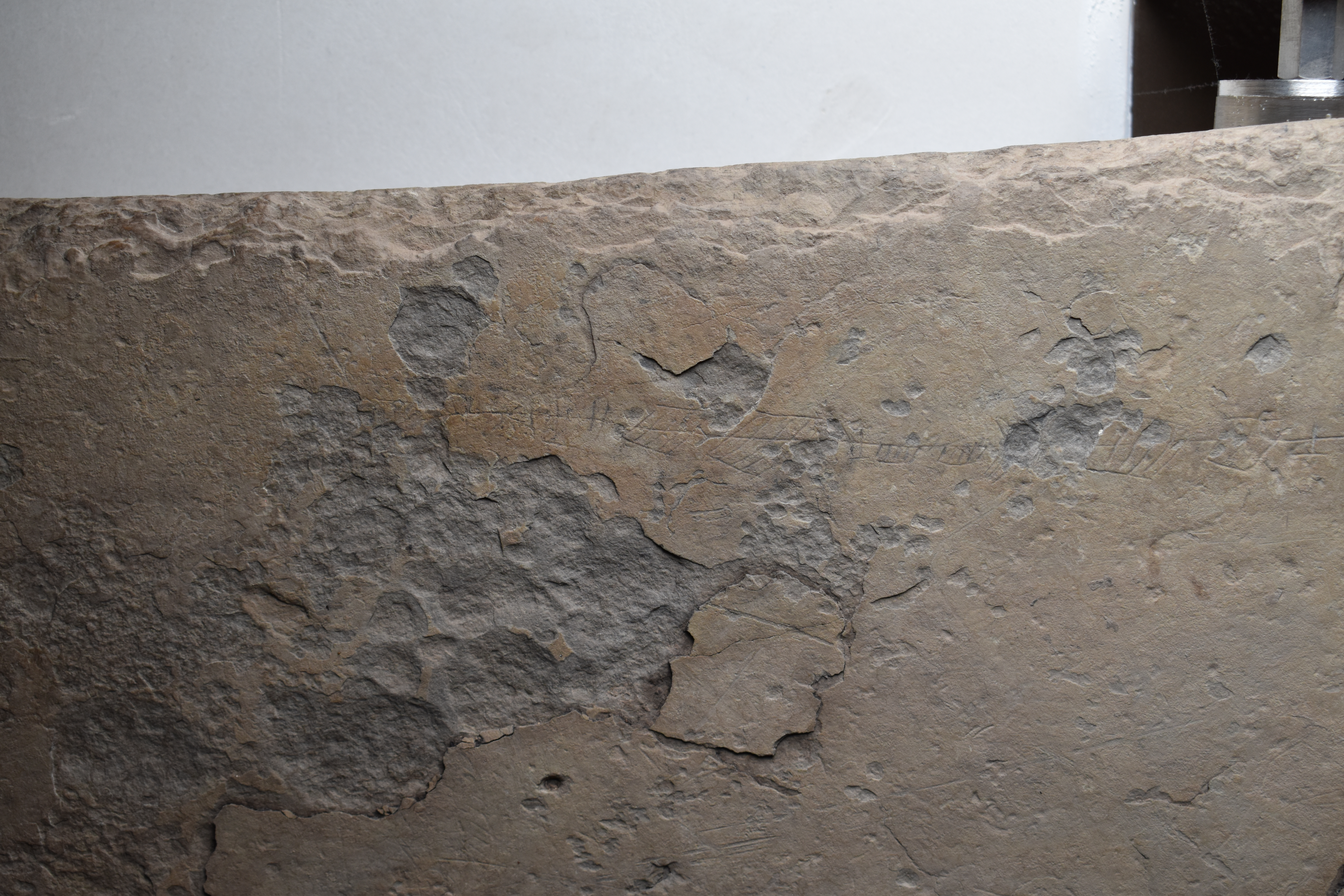
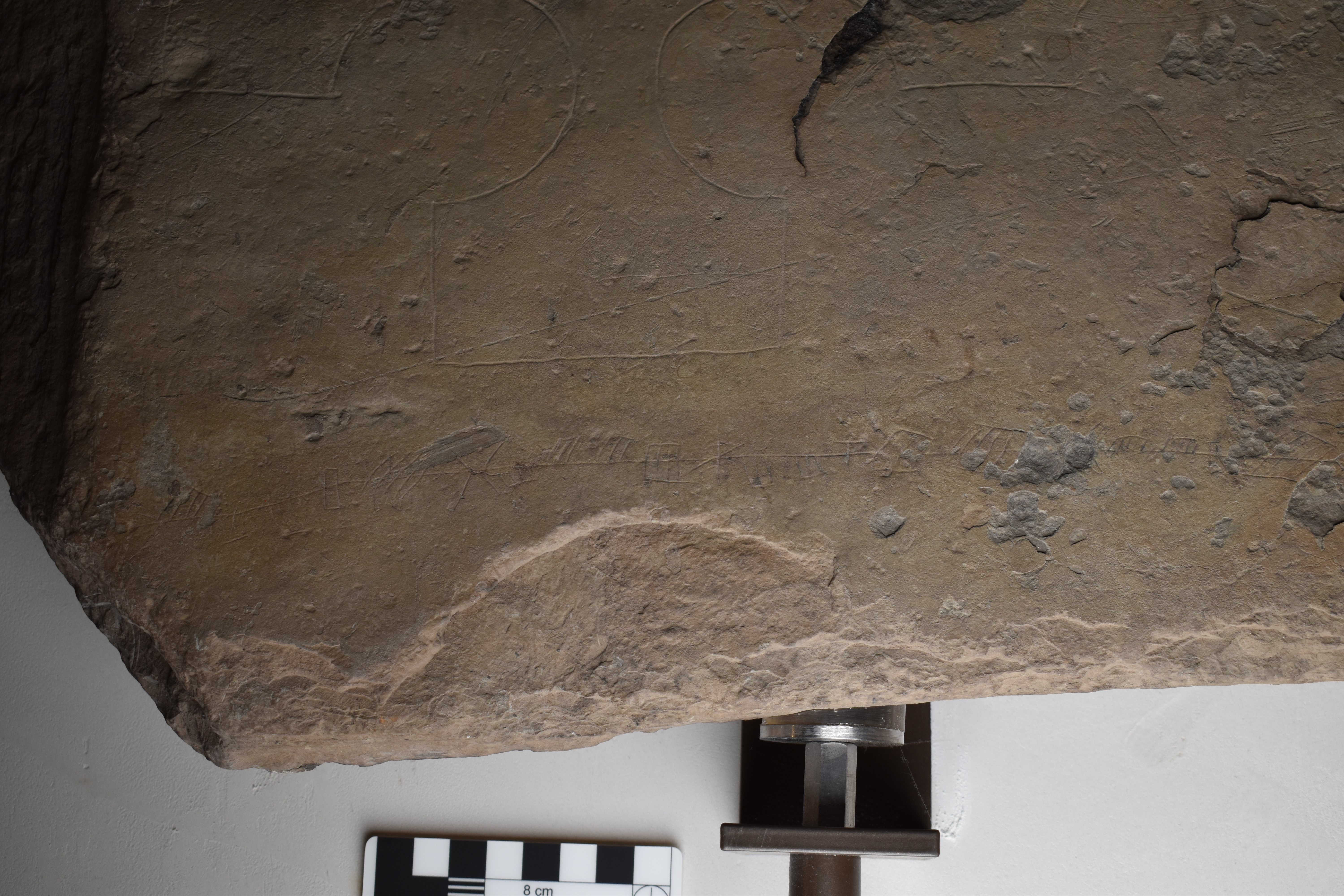
Text field: The ogham inscription runs vertically up the face of the slab on a wavering stemline, a few centimetres in from the left margin. The extant length of the text is 345mm and consists of 26 letters. The inscription finishes level with the top of the cross.
Letters: The Burrian ogham text is carved on a very fine scale and was very lightly and delicately scored (Forsyth 1996, 190, 192). The letters are mostly bound and are very well spaced from one another. Although previous commentators have described the ogham text as ‘scrappy’, Forsyth (1996, 199) contends that the Burrian text ‘exhibits one of the most developed forms of the script extant in Scotland. All its letters are bound, as appropriate, it contains angled vowels hammer-head As, and other forfeda, including the cross-hatched double R’. The individual letters range in size from 15mm to 3mm.
Date: Seventh or eighth century
Edition
Ogham text: ᚔ
Transcription: I̱BBEI̱RRANN UBRRACT KEVV CEROCCS
Critical apparatus:
- Word division as well as lack of certainty regarding the value of the various forfeda problematise the interpretation of the Burrian text.
Translation
A tentative translation: ? he/she made ? cross
Commentary
The significance of the Burrian text lies in its constituting the only extant sentence in Pictish. According to Forsyth (1996, 201) the final word of the inscription, CERROCCS, has been equated with the cross. The second word of the inscription UBRRACT ‘may represent the Pictish cognate of the Old Welsh 3sg.preterite *guract ‘he/she made’, cf. gwreith ‘I made’ ’, but, unfortunately, the initial letter of this word is damaged and doubtful (Forsyth 1996, 202). If this interpretation is accepted then the first word would probably represent the name of the person who made the cross. Given that the text appears to be written in Brittonic, we might expect a Brittonic name. There is doubt over the value of the initial letter of the possible third word, KEVV, however, despite this uncertainty this suggested interpretation yields a sentence of subject-verb-object structure which is at variance with the expected Celtic word order verb-subject-object.
References
- Forsyth 1996, 187-205
- Traill 1880, 341-364